
Trailer-level Questions Need Trailer-level Answers
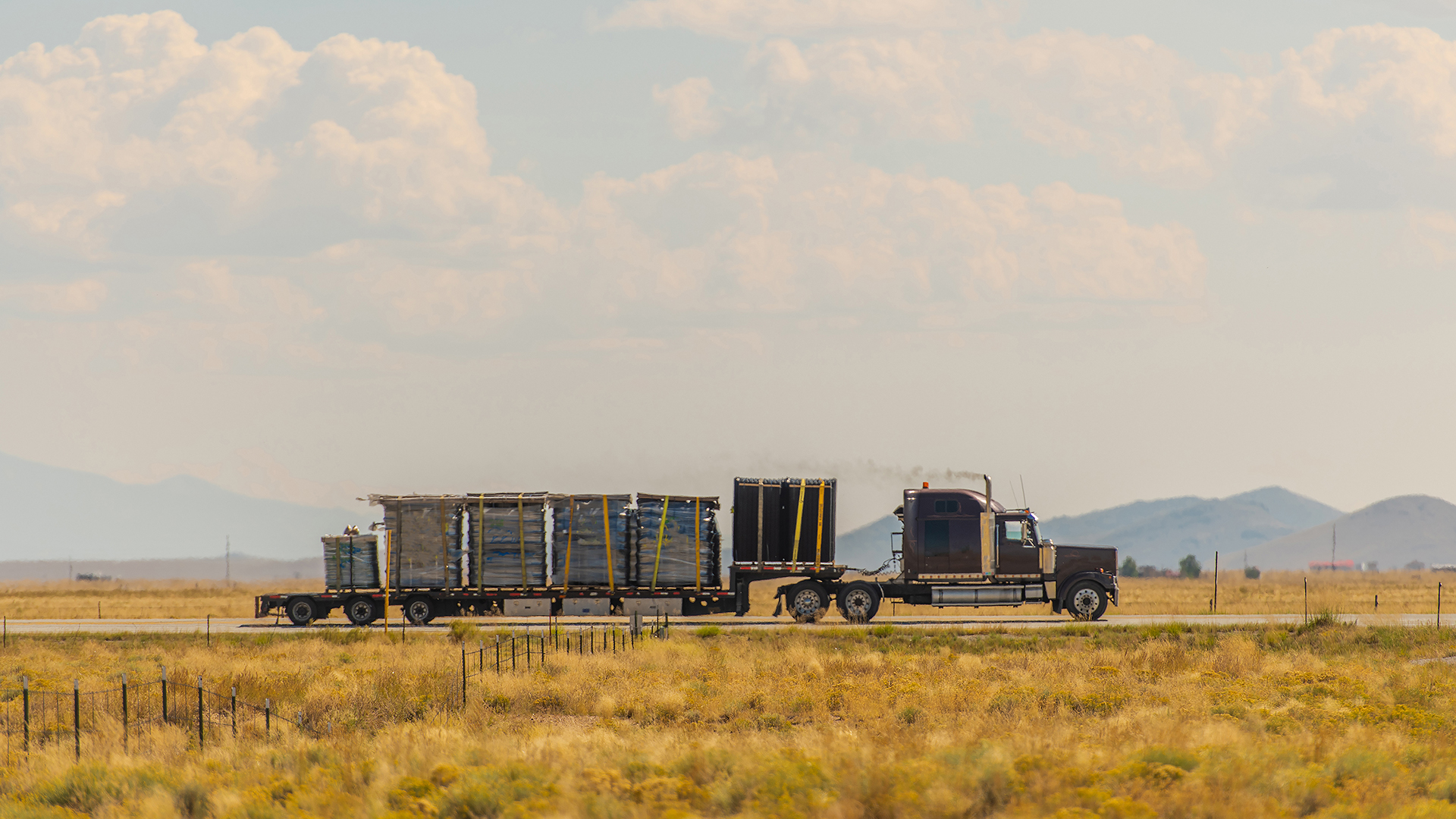
Truck Tracking Is Not Trailer Tracking
Semi-trailers create a simple visibility problem that many operations try to solve indirectly with Truck Telematics. Knowing where the truck is can be useful, but it is not always the same thing as knowing where the trailer is.
That distinction matters because semi-trailers spend much of their working life detached. They are dropped, staged, loaded, unloaded, transferred, reassigned, moved by different tractors, left at customer sites, held in yards, and recovered later. The tractor and trailer may share a route for part of the day, but they do not always share the same operational story.
Truck location does not always prove trailer location
Truck-based visibility works best when the tractor and trailer remain together. Semi-trailer operations do not always work that way.
When trailer visibility depends on the truck, every detached trailer becomes a potential blind spot. The system may still show movement, arrivals, departures, and idle time, but those signals belong to the tractor. They do not automatically answer the trailer question.
- Did the trailer arrive?
- Was it dropped?
- Is it still there?
- Was it moved by someone else?
- How long has it been sitting?
- Where was it before this location?
Those are trailer-level questions, and trailer-level questions need trailer-level answers.
Trailer uncertainty slows people down
The cost of poor trailer visibility rarely appears all at once. It builds through delay, manual follow-up, repeated questions, and weak records.
A trailer does not have to be stolen or fully missing for visibility to matter. It may have been dropped at the wrong location. It may have been held by a customer longer than expected. It may have moved without the right person knowing. It may simply be where it was supposed to be, with no easy way to confirm that fact.
In each case, uncertainty creates work, which costs time and money every day.
Dispatch checks notes. Yard teams look around. Drivers get called. Customers are asked to confirm. Someone tries to remember who moved what and when. A billing question may turn into a small investigation. A recovery issue may start later than it should because the team first has to figure out whether the trailer is truly gone.
This is the quiet friction behind trailer operations. People spend time reconstructing information that should have been available from the asset itself. Trailer loss is a problem now and then, but the larger operational problem that nags daily is working with incomplete information.
Visibility should stay with the trailer
A better model is straightforward: the trailer should remain visible as its own asset.
The tractor has its own job; the trailer has its own job; and the tracking model should respect the difference.
Trailer-level visibility means the record follows the trailer through detachment, staging, handoff, dwell, movement, and recovery. It means the trailer does not disappear from the operational picture just because the tractor moved on. It means a dropped trailer can still report where it is, and a reassigned trailer can carry its own history forward.
Semi-trailers are independent assets, so they should have independent visibility.
Asset-level tracking closes the gap between tractor movement and trailer status
The conceptual fix is to stop using tractor location as a proxy for trailer location.
A semi-trailer tracking solution should be mounted to the trailer, powered independently, and able to report without depending on the tractor. It should continue working after detachment. It should support location history, movement awareness, dwell review, and recovery. It should reduce the amount of manual work needed to answer basic trailer questions.
This matters most in the moments where uncertainty usually appears:
- After a trailer is dropped
- During staging
- Between yards
- At customer sites
- During contractor movement
- After handoffs
Those are the moments when truck-based systems can become less useful for trailer questions. They are also the moments when trailer-level visibility becomes most valuable.
The goal is to give the trailer a simple way to report on itself without adding complexity.
GSatSolar gives the trailer its own way to report
GSatSolar is built around that idea.
It is a stick-on tracker that gives a semi-trailer its own power, GPS, and satellite connectivity in one device. It does not need to rely on the tractor for visibility, and it does not need trailer wiring to make the trailer trackable. It also does not depend on a driver manually reporting every movement.
The device stays with the asset no matter what.
- When the trailer is detached, the tracker stays with the trailer.
- When the tractor leaves, the tracker stays with the trailer.
- When the trailer is staged, moved, held, or recovered, the tracking record stays with the trailer.
For semi-trailer operations, that creates a cleaner source of truth.
Teams can see where the trailer is. They can review where it has been. They can reduce handoff uncertainty. They can support recovery with better location history. They can answer customer or billing questions with more than memory, assumption, or manual reconstruction.
Truck tracking still has value. It helps manage the vehicle, the driver, the route, and the work attached to the tractor. Trailer tracking answers a different set of questions.
A semi-trailer should not become invisible because the tractor moved on. To keep visibility on your trailer fleet, contact a GSE rep and mention this article.